The Gate of Silence.
On the Emergence of a New Myth in the Work of Steven Peters Caraballo
Em. Prof. F. Decreus
In the work of Belgian artist Steven Peters Caraballo (b. 1978), layered strata of ancient myth, universal dreams and archetypal images converge. From the outset, these paintings resist any aspiration towards transcendence in a celestial or spiritual sense. Instead, something unnamed moves insistently through body and skin—human, animal and vegetal alike. What unfolds is a theatre of the unspoken: a realm in which all forms of life appear mysteriously interconnected and animated by a shared, archaic force.
Caraballo’s images do not offer explanation. They enact a presence—chthonic, transformative, profoundly old—that passes through bodies rather than beyond them.
In this sense, the artist also becomes a philosopher, raising urgent existential questions that resonate with contemporary debates in science and philosophy concerning consciousness, ecology and the limits of the human.
At the heart of this oeuvre emerges a new symbolic figure: Charon, reimagined as a female primordial force—a muse for a new epoch. Drawing on popular elements of classical Greek mythology, Caraballo overturns the familiar image of Charon as the male ferryman who transports souls across the river Styx under patriarchal divine command, enforcing a final and irreversible passage from life to death. Against this linear, terminal cosmology, Caraballo reintroduces suppressed dimensions of cyclical thinking, regeneration and return—echoes of earlier, matriarchal imaginaries in which life continuously re-enters the fertile body of the Earth.
This revisionist myth is set against the dark symbolic legacy of Arnold Böcklin’s ‘Isle of the Dead’ (1880–86), a painting that once crystallised a 19th-century vision of death as isolation and finality. Caraballo’s intervention is acutely contemporary. In an era marked by dehumanisation, ecological exhaustion and planetary precarity, the ancient journey of the dead demands renewed meaning.
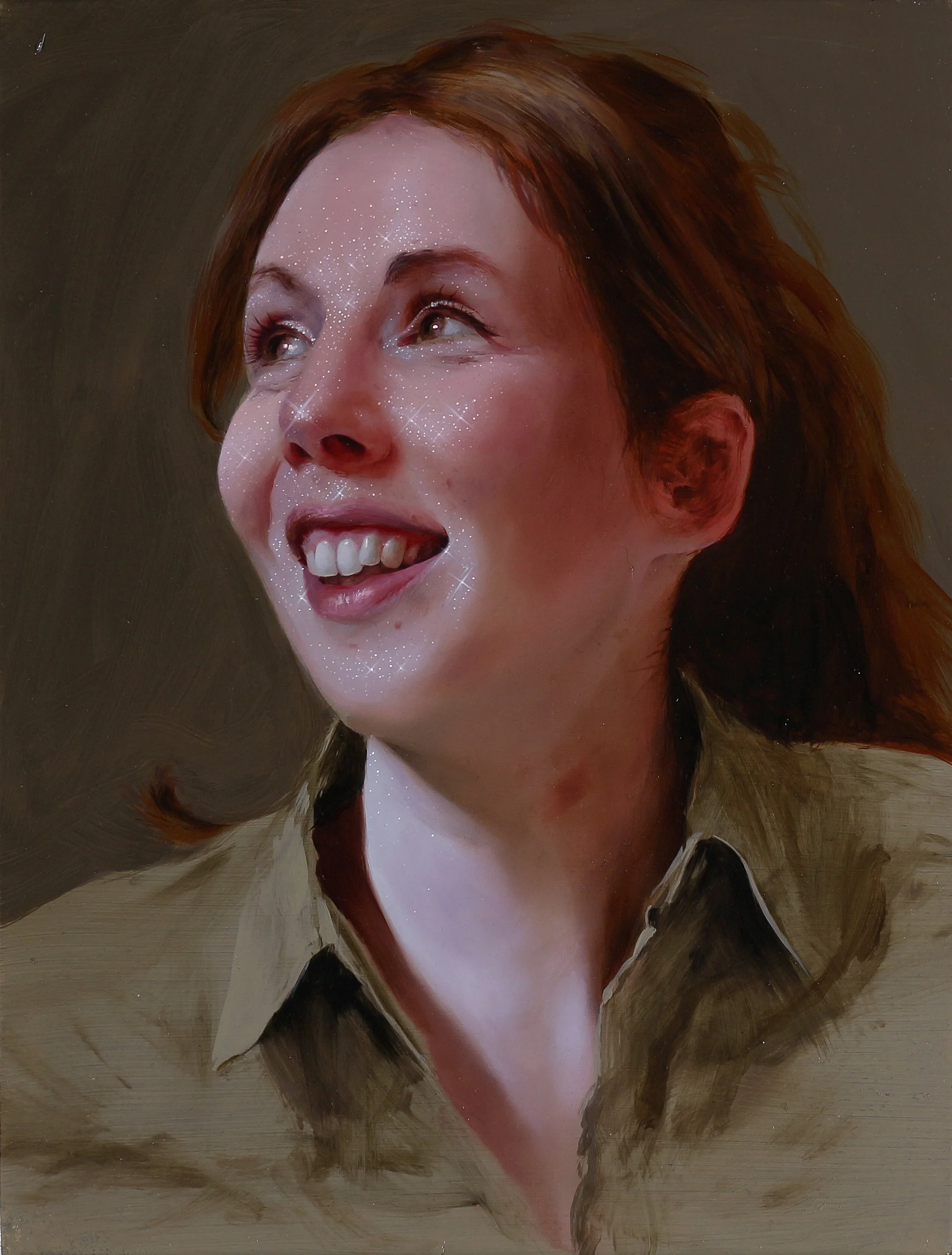
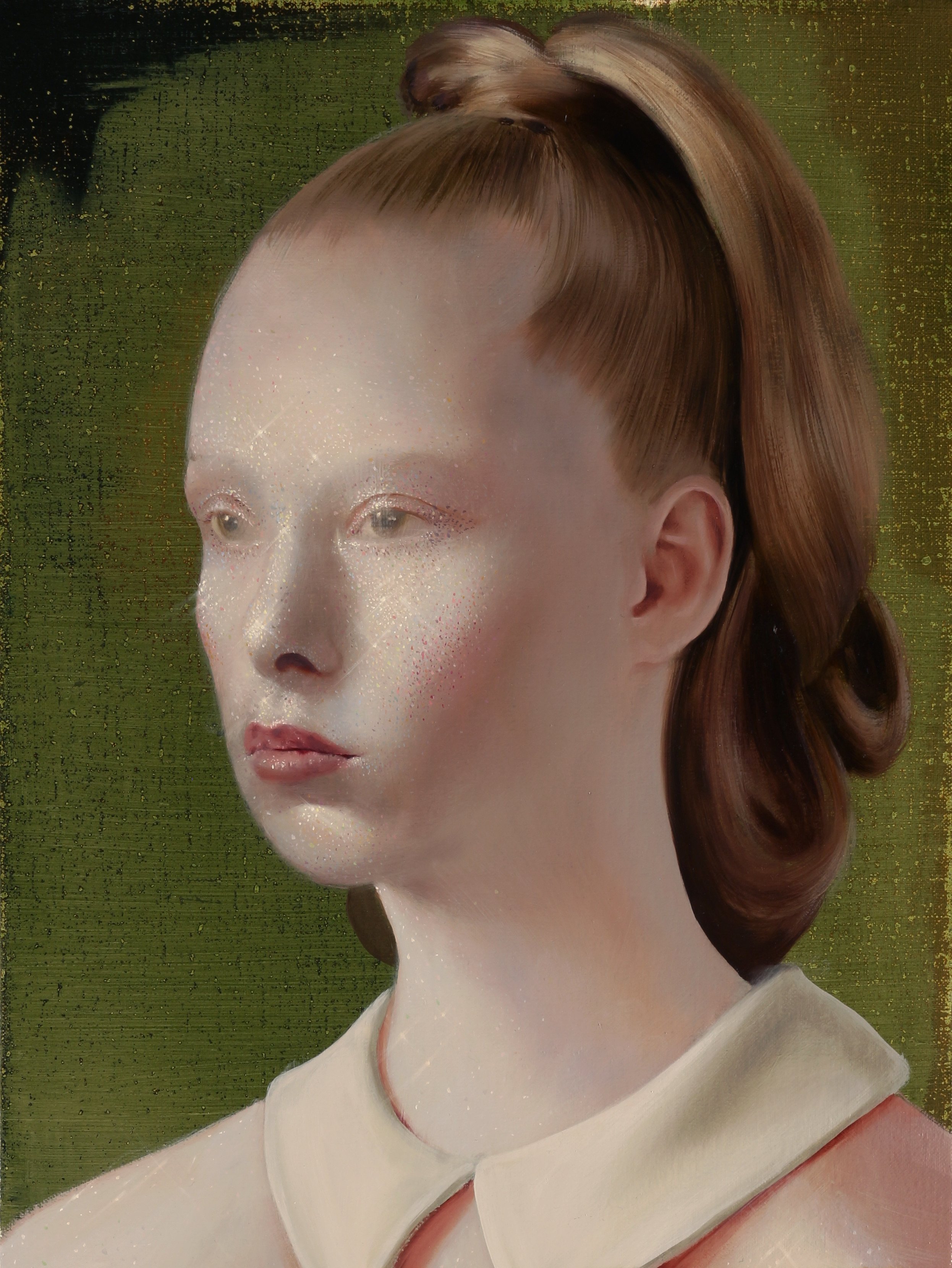
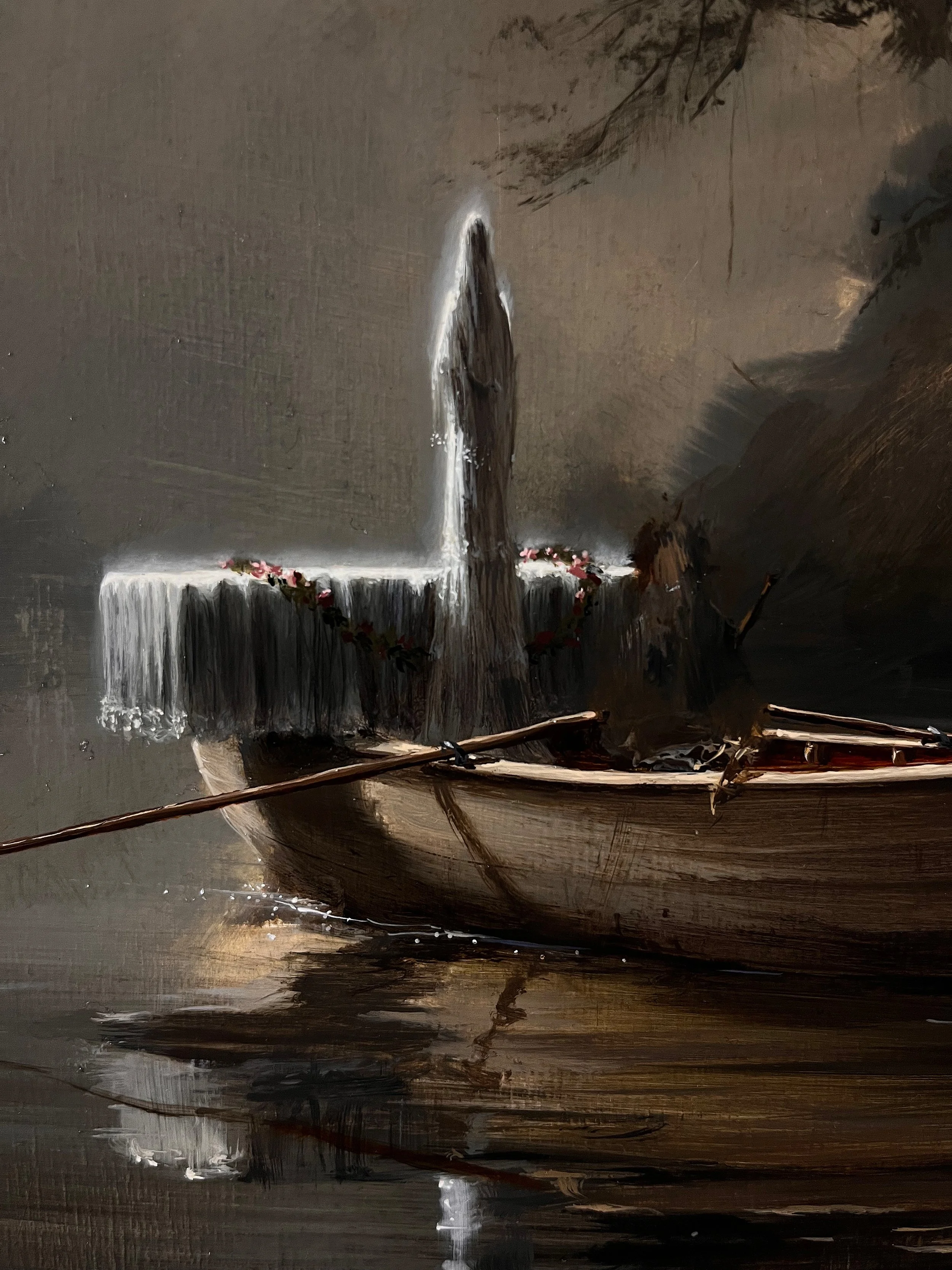
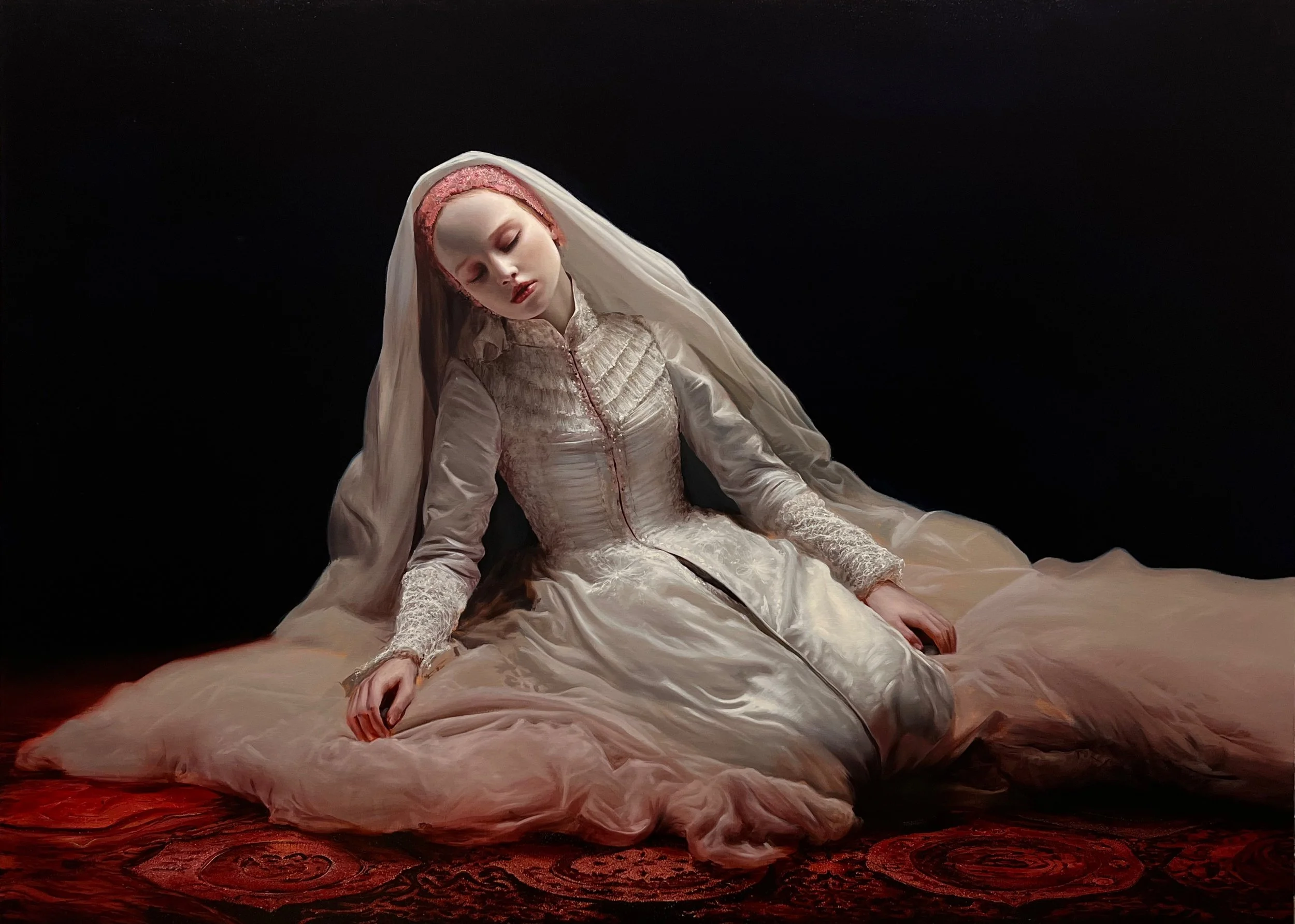
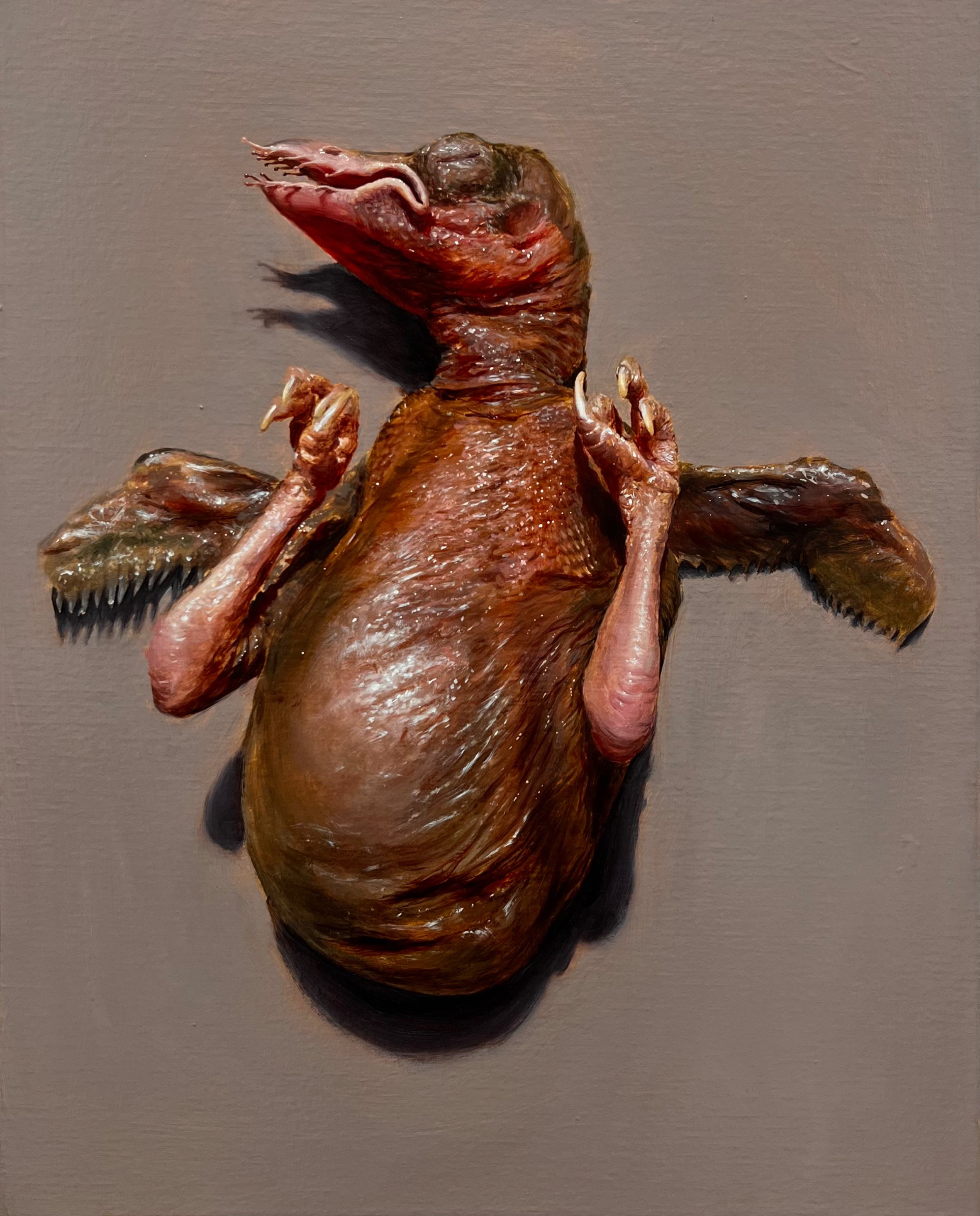
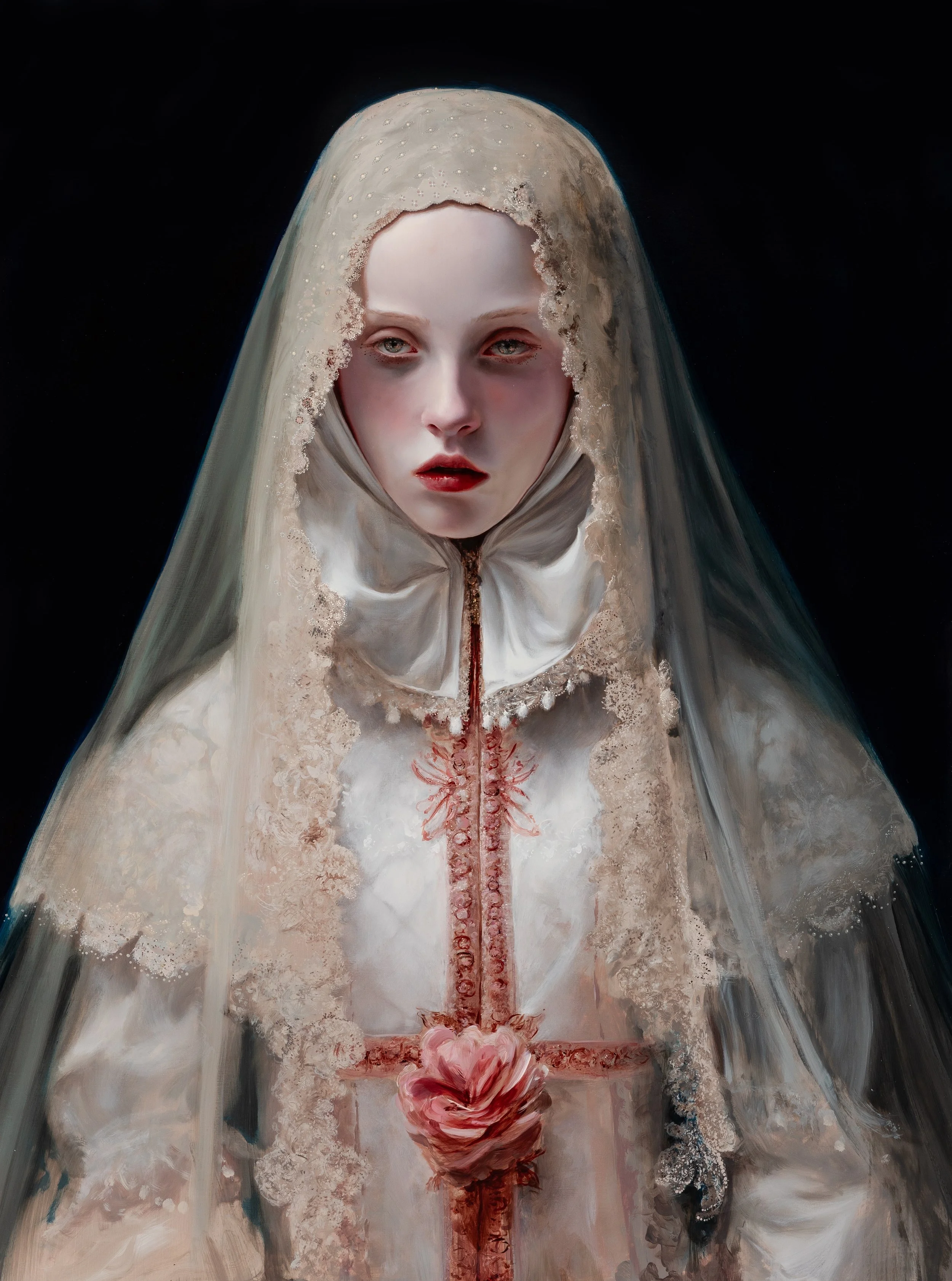
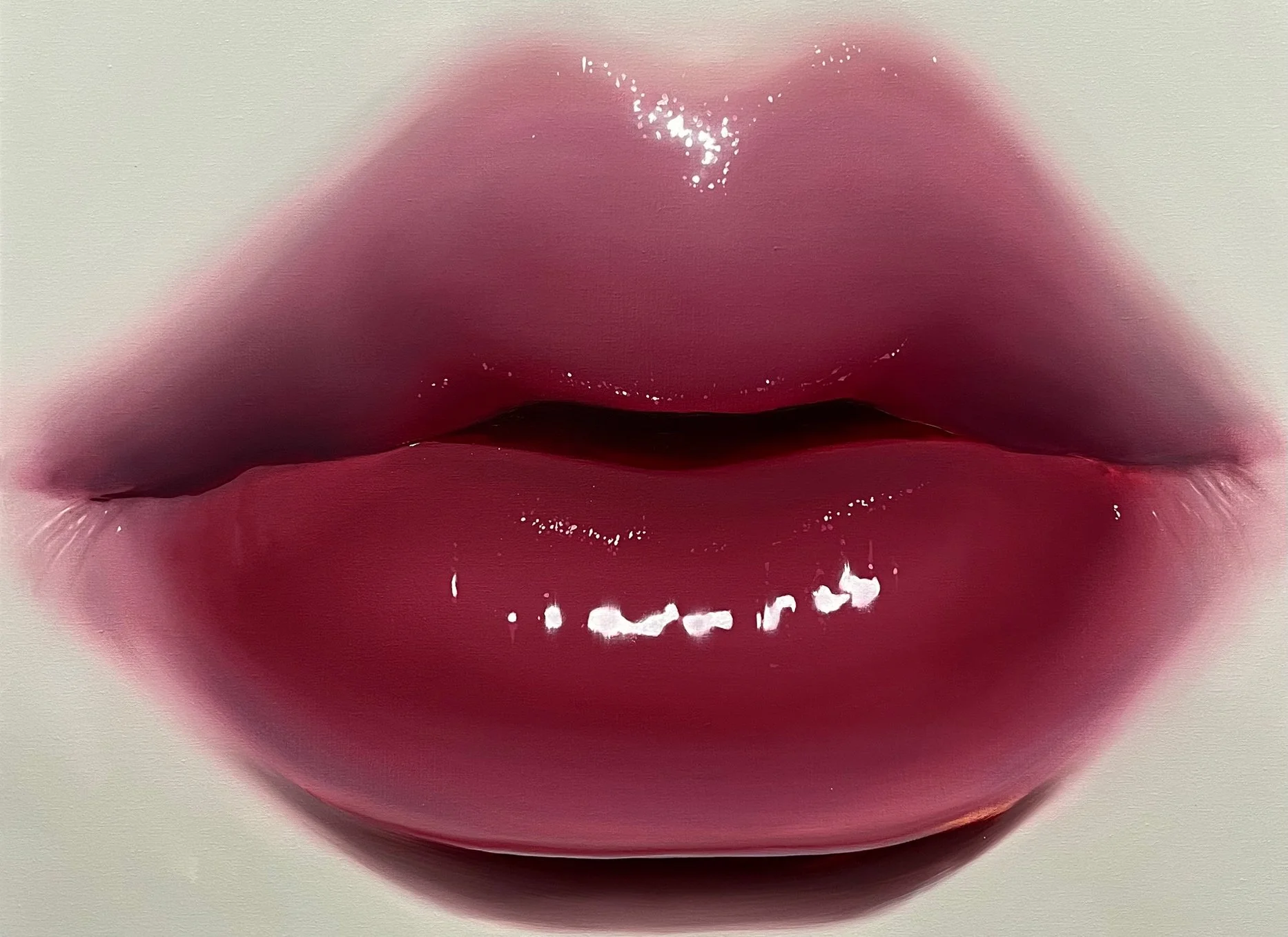
The point of departure is disturbingly close to home: ‘The Consumers’ (no. 1-2) confront us with our own participation in systems of extraction and excess, and with the inevitability of the crossing that awaits us all. Landscapes unfold with virtuosic stillness yet remain inaccessible, uncanny carriers of a mystery that resists entry (no.3). Who is this new Charon, whose eyes emit an unsettling glow (no.9), whose lips invite an unknown passage (no.10)? A sense of estrangement overtakes the viewer, compelling a hesitant initiation into what feels like a contemporary dream-time.
In Caraballo’s mythic universe there is no descent into hell, nor ascent into the heavens. Charon appears as a young woman—seductive, solemn, ever-transforming—who accompanies each crossing anew. At the banks of the Styx she is reborn with every soul she receives: a pale, psychopompic presence guiding the dead not towards judgement, but towards self-recognition (no. 4). Her gaze must be avoided, for to meet it is to risk dissolution. She embodies an ambivalent force: irresistible attraction and latent danger, eros and annihilation entwined.
Rather than enforcing submission, Charon instructs the souls to turn inward—to look into their own eyes, to revisit intentions, actions and consequences. This final passage becomes an ethical and existential reckoning, a tactile exploration of karma understood not as punishment but as resonance. Consciousness here is neither extinguished nor redeemed; it is dispersed, redistributed across a vast field of relations.
Painted in virtuosic colours, with great detail and refinement, two Charons also form the underlying layer of the icon triptych designed by the Belgian artist-director Jacq (Wayn Traub) for the Minsterwood project, presented for the first time at River City Gallery in Bangkok (23 January–8 March 2026).
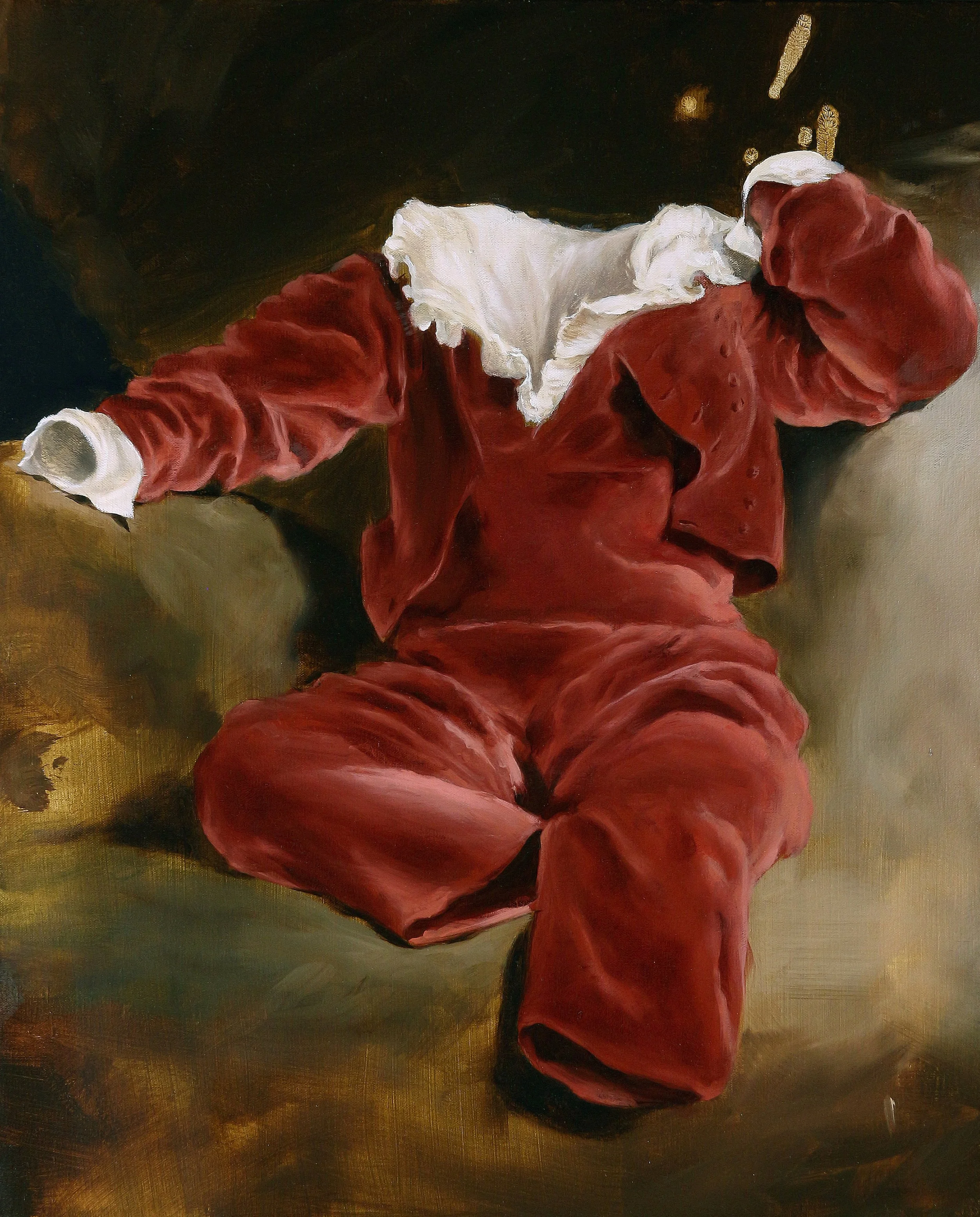
On the island across the way stands ‘The Red’ (no.5): a small, bodiless child figure clothed in crimson velvet. Innocent, creative and nonjudgemental, this being assists the dead in releasing illusion, fear and fatalism. Cause and effect ripple one last time through a resonant field where every past intention is felt as vibration rather than verdict.
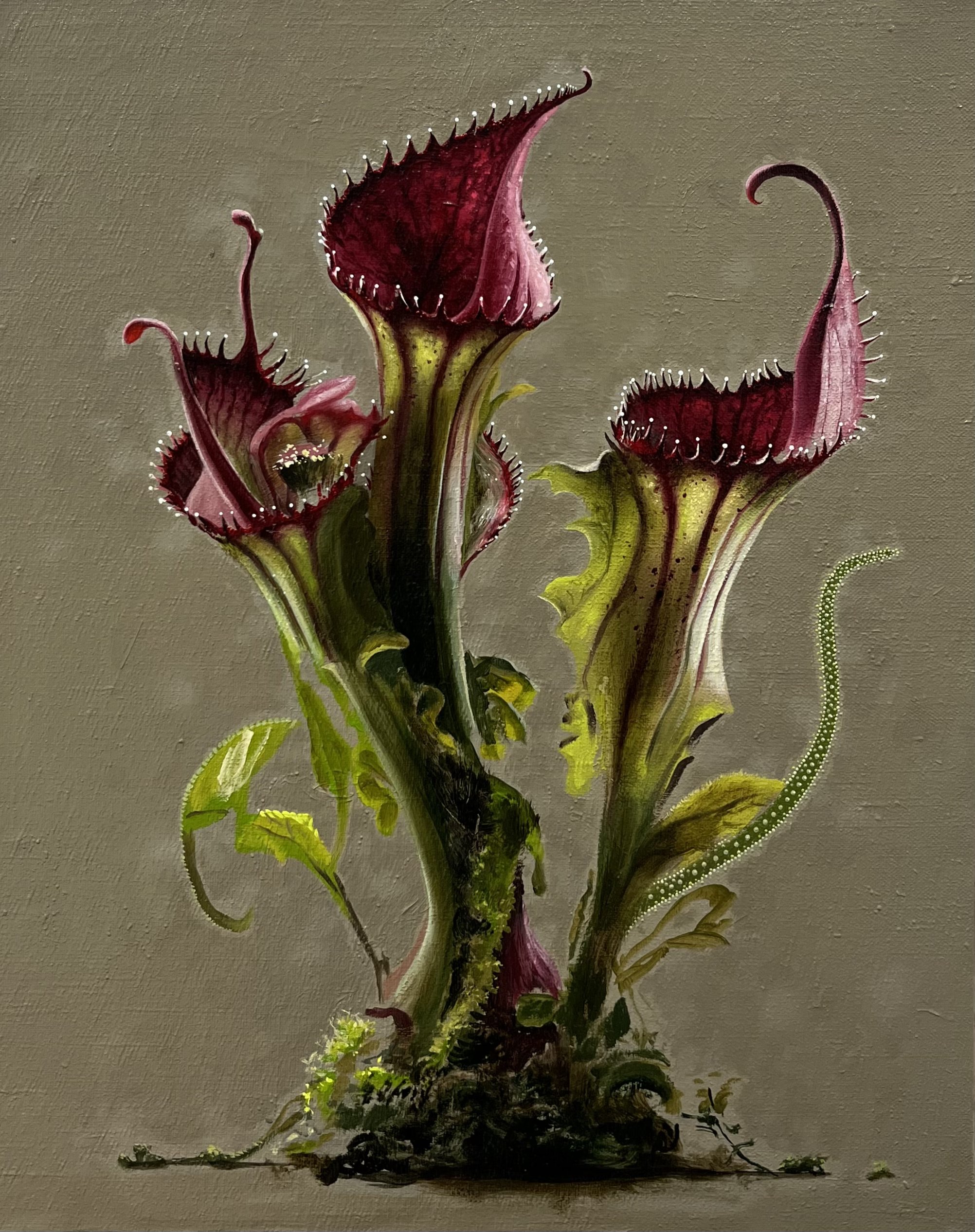
Fauna and flora (no. 6-7) inhabit this threshold as active agents, not decorative backdrops. They form a pre-human, ecological consciousness in which human states of being dissolve into a continuous living fabric. Plants and animals respond to passing souls as plants respond to light—participants in the transition itself. Life and non-life are no longer opposites but sliding, symbiotic fields. Death is not an endpoint but a condition of transformation. The Styx becomes part of a mytho-ecological continuum rather than a terminal border.
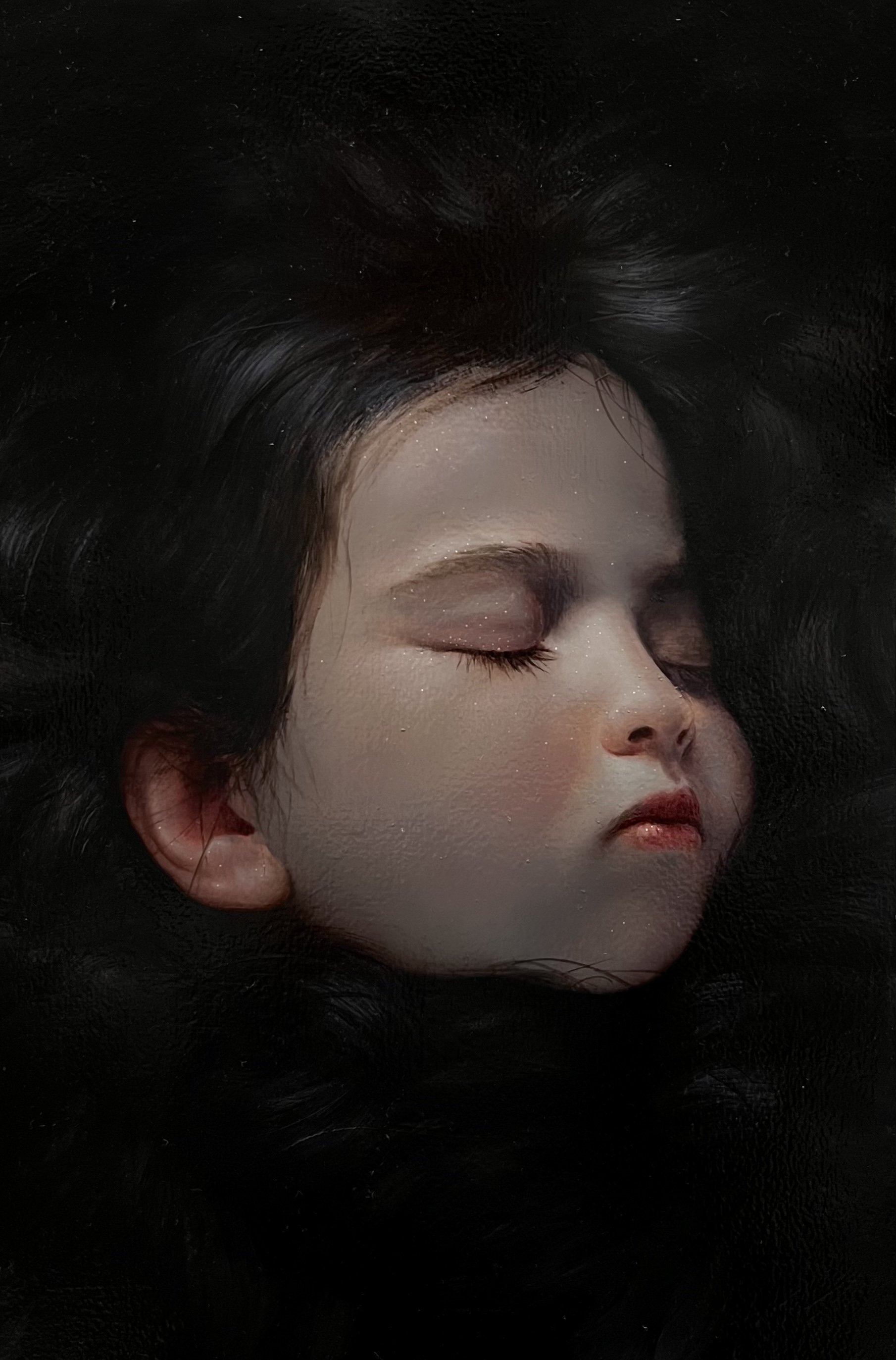
In Caraballo’s work, smaller panels often depict sleeping children rendered with Rubensian softness. In their dreams we witness here, they sense the crossing—the body at rest, the mind searching. Vulnerable and open, they breathe within an archetypal consciousness where myth and existence remain unfragmented, suffused with silence and innocence (no.8).
The cycle culminates in the ‘Mouth of Charon’ (no.10): an enlarged pair of lips that functions as an existential threshold. Through these lips we inhale and exhale life—the first breath, the last, and all that lies between. They speak and withhold, invite and resist. As a site of sensuality and restraint, they embody another gateway: erotic, dangerous, poised between surrender and refusal.
Thus emerges a new myth. Charon, princess of absolute beauty, fascinates and destabilises, seduces yet cannot be possessed. She is a double-faced Aphrodite whose power lies in keeping desire fluid, never fixed as ownership (no.9). To encounter her is to confront a dimension larger than the self—one that can undo as much as it can reveal.
In Caraballo’s visual language, Charon becomes a model of consciousness itself: one that experiences the Earth as a single living organism. Myth here articulates an eco-mythology in which humanity is not separate from the universe but a temporarily self-aware expression of it. Consciousness remains both personal and radically non-local, dissolving like a wave into the water it traverses—only to rise again elsewhere.
This is not a return to classical myth but the proposal of a new one: eco-mythological, consciousness-based, and urgently contemporary. In a time when science itself cannot yet locate the origin of consciousness—whether in the brain or the cosmos—Caraballo offers an artistic framework that exceeds both. What emerges is the outline of a renewed humanism: one that no longer positions humanity as observer of nature, but as a node within an immense, interdependent network of transitions.
Charon is no longer an outsider guiding us across a boundary. She is the boundary—the liminal condition itself. The human is merely the passing form. Her boat carries us as a dying wave, yet a wave belongs to water, and elsewhere in that same water, another wave is already rising.
referenced works